

1/2
Minimoog

2/2
Minimoog
In General
Created in 1969 and sold between 1970 and 1981, the Moog Minimoog is arguably the most iconic and influential synthesiser of all times. Developed by one of Moog's engineer during his lunch breaks, it was the first compact, portable and affordable synthesiser ever to be commercialised, and it quickly became the blueprint for all synthesisers to come.
Features & use
The Minimoog is a monophonic analogue synthesiser in a compact, pre-routed and user-friendly format. Its main architecture comprises three voltage-controlled oscillators with selectable waveforms, a mixer with noise and external inputs, a 24 dB/octave low-pass filter with resonance, an ADS envelope generator for the voltage-controlled amplifier, a few modulation options and a keyboard controller with glide and decay functions. All controls are accessible via the dedicated knobs and the 44-note, non-velocity sensitive keyboard with low-note priority. There are also a few external CV inputs to trigger notes or alter some functions.
The Minimoog famously owe its 'warm and rich' sonic proprieties to a few constraints and errors during its development. Firstly, as integrated circuits were still quite unstable at the time, discrete transistors are used throughout the whole signal path, contributing to an overall warmer sound. Secondly, as the engineers could not properly stabilise the power supply, the three oscillators would never perfectly synchronise. This creates harmonically richer tones. Thirdly, due to some miscalculation, the filter is also quite overdriven, resulting in its famously appreciated sonic proprieties. Its ability to self-oscillate at high resonance settings – creating the so-called 'sixth sound of the Minimoog' as stated in the instrument’s manual – also contributed to some of the Minimoog’s signature sounds.
A lesser-known but nonetheless important innovation brought by the Minimoog is its pitch-wheel. It was designed to give keyboard players greater artistic expression, enabling them in particular to perform pitch bends like their guitarist counterparts. This feature would be greatly appreciated, especially among jazz musicians how used it to perform solos that audiences had never heard before.
Application In Music
Thanks to significant marketing efforts aimed at promoting this new type of accessible and intuitive instrument, the Minimoog quickly gained a reputation and became popular amongst musicians, first in the US and then worldwide. It took only a few years for it to find its way into some of the decade's most defining recordings, such as Yes’ Close to the Edge (1972), Herbie Hancock’s Head Hunters (1973), Bob Marley’s Catch a Fire (1973), Pink Floyd’s Wish You Were Here (1975) and, of course, Kraftwerk’s Autobahn (1974), an essential recording in the history of electronic music.
Musicians all over the world rapidly noticed its warm sound, well suited for bass tones but also for powerful leads. But they also noticed its remarkable versatility and unprecedented portability. Soon enough, the Minimoog was everywhere, challenging the guitar’s dominance on stage and contributing to the birth or development of new music genres.
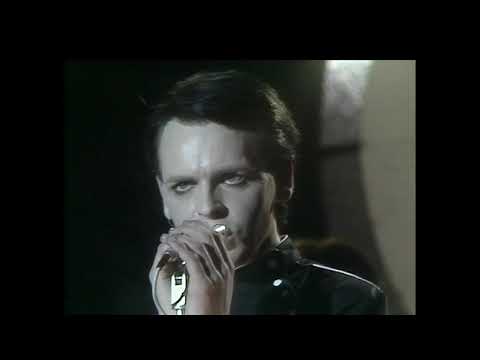
The Minimoog was adopted by prominent figures of all genres : Sun Ra or Chick Corea in jazz, Emerson, Lake and Palmer and Rick Wakeman in prog' rock, Parliament in funk, Klaus Schulze and Tangerine Dream in the Berlin School, Gary Numan with the band Tubeway Army and Devo who marked the debuts of the synth-pop era, Rush in hard rock, ABBA and Giorgio Moroder in disco and then italo disco, Ultravox in the 'New Romantics' scene and, of course, Michael Jackson in pop, Carl Craig and 808 State in techno and house, Nine Inch Nails in industrial rock and metal, Dr. Dre in hip-hop, Portishead in trip-hop, Daft Punk in french touch and many more.
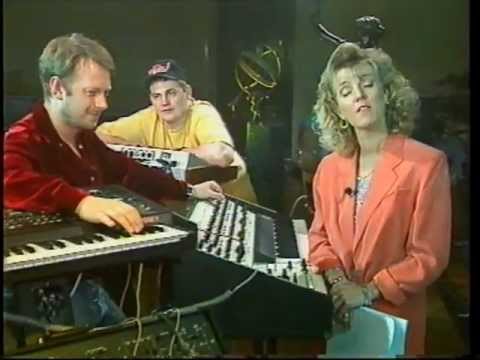
Nowadays, new or vintage Minimoogs are still found in most recording studios around the world and heard in countless new releases. Snarky Puppy uses one in 'Culcha Vulcha while the Weeknd's productions seem to feature it in songs like 'Dawn FM'. Dua Lipa's 'Dance the Night' also probably features a Minimoog, doubling an electric bass guitar.








Genesis and Distribution
The Minimoog is known as the 'Model D' because it is actually the fourth version of the prototype that was released in November 1970, a moment that marked a turning point in the company's history. Back in 1964, Moog had started selling modular synthesizer parts, but the systems were still relatively fragile and clearly expensive and difficult to use – especially at a time when audio synthesis was still unknown to almost every musicians worldwide. Costing tens of thousands of dollars, they were mainly bought by universities and major studios. By 1970, only 28 were owned by musicians. However, the need for a simpler, cheaper and more portable instrument had not become clear yet. At that time, synthesizers were considered marginal, and that was normal.
The Minimoog was born in the company's attic in Trumansburg, New York, a place nicknamed “the graveyard.” In late 1969, engineer Bill Hemsath assembled the first prototype, Model A, during lunch breaks from discarded 900 Series modules, a sawed-down three-octave keyboard and a single oscillator controller taken from stock. Bob Moog initially saw little commercial potential in this then named 'Min A.', but further prototypes changed his mind. The Model B, built in early 1970 with the help of Chad Hunt and Jim Scott, introduced an integrated panel, modular-derived circuit boards and a carrying lid, establishing the instrument's portability as a key concept. The Model C followed in mid-1970 with newly designed and simplified circuits, a five-octave keyboard, left-hand performance controls and Bob Moog's characteristic rocker switches and folding panel.
By late 1970, the final design was refined for mass production with printed circuit boards and replaced the left-hand sliders with the first expressive pitch and modulation wheels in history, an innovation by Bob Moog to allow more human nuance. The first Model D unit, serial no. 1001, was shipped to Walter Sear on November 19, 1970.
Reception and legacy
When the Minimoog was first released, the company expected to sell around a hundred instruments. However, demand quickly exceeded these expectations. By 1971, Moog was struggling to produce enough units and lacked the capital needed to purchase sufficient quantities of parts. In a bitter irony, Robert Moog eventually had to sell his company's controlling interest in order to finance its growth.
A decisive figure in the instrument's commercial success was the musician and former evangelist David Van Koevering, who spearheaded Moog's sales technique. His 1970 pseudo-psychedelic “Island of Electronicus” events on a private island in Florida – owned by his friend Glenn Bell, the owner of Taco Bell – combined demonstrations and performances in a countercultural spectacle set to establish the then-radical idea of the synthesizer as a 'commercially accessible musical instrument'.
The Minimoog quickly became a staple of late 20th-century music. Rick Wakeman rightfully said that it “absolutely changed the face of music.” Its portability, powerful sound and performance controls now allowed keyboardists to play prominent solos and bass lines on stage. By 1972, Moog's catalogue was centered on the Minimoog as “The Instrument of the Pros,” associating it with players such as Keith Emerson and Chris Swansen. Its success also encouraged the development of compact successors like the Moog Sonic Six in 1972 and Minitmoog in 1973.
Its cultural reach extended far beyond popular music: Minimoog sounds were even included on NASA's Voyager Golden Record in 1977. Production ended in 1981 as Moog turned toward newer designs amid growing competition and the rise of digital synthesis. In 1986, the company declared bankruptcy and ceased operations in 1993, after having released the rare Minimoog 240E in 1988. Robert Moog regained the rights to the Moog name in 2002 and introduced the Minimoog Voyager, while new editions of the Model D followed in 2016 and 2022.
Technical details
Due to the particular conditions of its development, the Minimoog presents many interesting technical specificities, many of which are mentioned in the instrument’s manual. An all analogue instrument, it takes about 10 minutes to warm up. Its enveloppe decay, derived from the prior 911 Moog module, can last up to 10 seconds. The oscillator’s 'Lo' position was designed 'to produce sub-audio clicks which may be used for rhythmic effect’, as the manual states. Also, the 'osc 3. control' switch only disconnects the third oscillator from the keyboard’s control. One needs to activate the 'oscillator modulation' or 'filter modulation' switches to use it as a modulation source.
The filter, for its part, is a simplified but miscalculated version of the brand’s 904A filter module. A ladder filter type, it’s the first voltage-controlled filter ever created and the only invention Moog patented, despite the brand’s numerous innovations. The Minimoog’s version of the filter enters much quicker in distorsion, adding even more harmonics to the transistor’s signal path. Obviously, this unintentional aspect is not mentioned in the manual. What the manual states instead is that 'with the cutoff set to -2, sustain set to 0, amount of contour set to 10 and attack and decay set to about 7, the resonance sweeps through the overtone series’.
The Minimoog also features a few unconventional input ports. The first one is the external S-Trig format input, for which Moog would provide an adapted plug. When connected, it can act either as a sustain pedal, a trigger for the filter or loudness contours, or it can be used to maintain them at the set sustain level.
The other unconventional ports are found next to the glide and decay switches. Instead of the standard quarter-inch (6.35 mm) format, they require 0.206-inch (5.2 mm) jacks. Often designated as the PJ-068 or PL-68, these were mostly found in military or aviation equipment. These ports were removed in further versions of the Minimoog.
Summary Table
-
category
-
classification Sachs & Hornbostel531.222.1
-
brand
-
engineer(s)Bill Hemsath Chad Hunt Jim Scott
-
engineering placeÉtats-Unis
-
manufacturing placeÉtats-Unis
-
manufacturing typeIndustrial
-
begin of production
-
end of production1981
-
previous versionMoog 900 Series
-
following versionMoog Sonic Six, Minitmoog, Moog Voyager (2002)
-
modded version(s)
-
number3
-
typeanalog
-
waveformsTriangle Sawtooth-triangular Sawtooth Square Wide rectangular Narrow rectangular
-
parametersRange Select (4’, 8’, 16’, etc.) Osc On/Off Frequency/Tune Waveform Select Osc Volume (into Mixer)
-
synthesis methodsubtractive
-
max. oscillators per voice3
-
voicing modemonophonic
-
number1
-
typeanalog
-
modesresonant low pass [24dB/oct]
-
parametersCutoff Resonance Envelope Amount Envelope Attack Time Envelope Decay Time Envelope Sustain Time Keyboard Tracking Modulation Switch
-
modelladder filter
-
number1
-
number of LFO(s)1
-
waveformsTriangle Ramp Down Ramp Up Square Wide rectangular Narrow rectangular
-
parametersAmount Fine Tune Frequency/Rate Waveform Select Assignation selector (Amp, Filter, Pitch) Keyboard Tracking
-
performance interfaceKeyboard [44keys]
-
aftertouch sensitiveNo
-
(optional) pedalsHold/Sustain
-
performance parametersGlide Decay Pitch Wheel Mod Wheel
-
midiN/A
-
power type115/230V AC
-
audio/cv input(s)1x Jack 6.3mm TS (Audio In) 3x Jack 6.3mm TS (CV In) 1x Jack 5.2mm TS (Decay Control) 1x Jack 5.2mm TS (Glide Control) 1x S-Trig (CV In)
-
audio/cv output(s)2x Jack 6.3mm TS (Lo/Hi Audio Out)
-
dimensions727x435x146 mm
-
weight14.5 kg
-
accessoriesAudio Cable Manual Commercial Brochure Shorting S-Trig Plug Warrantee Optional Accessories List
Resources
- Moog Minimoog on Google Arts and Culture.google.com
- Moog Minimoog on Soundonsound.com
- Moog Minimoog on Amazona.de
- Moog Minimoog on Redbullmusicacademy.com
- Moog Minimoog on DoctorMix.com
- Moog Minimoog on Electronicsound.co.uk
- Moog Minimoog on Wikipedia.org
- Moog Minimoog Model D on Equipboard.com
- Moog Minimoog presented by Bob Moog on YouTube.com
- Moog Minimoog presented by Marc Doty on YouTube.com
- Moog Minimoog presented by Red Bull Music Academy on YouTube.com
- David Van Koevering on Soundonsound.com
- David Van Koevering on Moogfoundation.com
- The Minimoog Prototypes History on Patchandtweak.com